KLOW peptide dosage and frequency
The composition is easy to total. A human regimen requires evidence the blend does not yet have.
KLOW peptide dosing
A KLOW peptide dosage search tends to turn up an amount with a surprisingly certain tone. The research gives no tested human dose for the four-ingredient blend. There is also no controlled animal study of the complete mixture from which to build a clinical dose-finding programme.
A neat total wins no confidence from me without an experiment behind it. Here there is no blend experiment: ingredients were studied separately, in different species, with different delivery routes. Numbers drawn from those settings cannot be assembled into a validated human KLOW regimen.
80 mg: ingredient weights
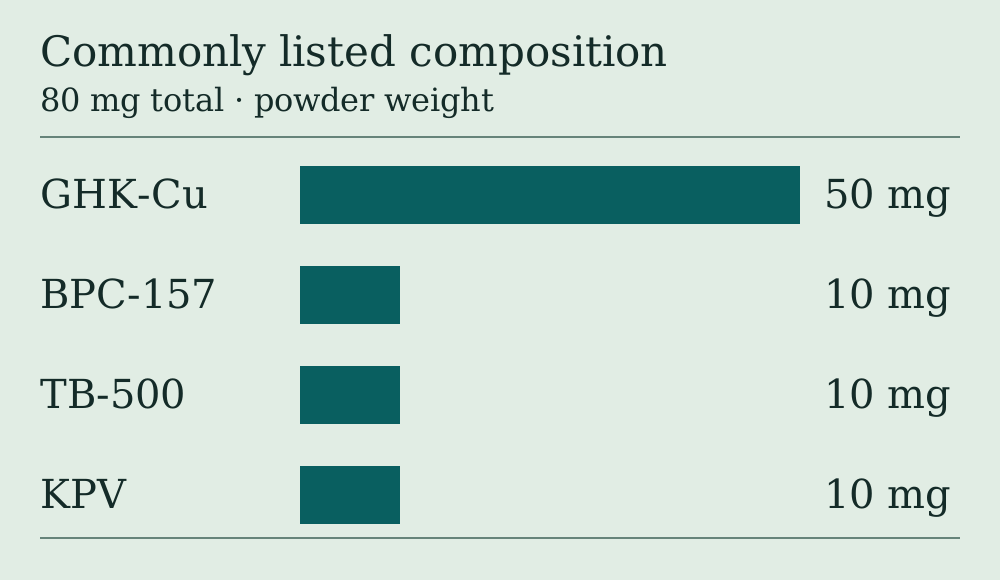
The commonly listed mixture contains GHK-Cu 50 mg, BPC-157 10 mg, TB-500 10 mg and KPV 10 mg, for an 80 mg total. Those figures describe the contents of a preparation. They have never been selected as a safe or effective combination in a controlled human trial, and no FDA-approved or pharmacopeial KLOW formula exists.
The copper-containing ingredient dominates the powder weight. In a review, I would give powder weight no special authority over benefit: mass and biological effect are different measurements. Nor does a starting weight tell us how much intact peptide reaches a particular tissue.
Experimental amounts
The KPV gut study used 10 nM in cell experiments and 100 micromolar in mouse drinking water. Those are concentrations in experimental liquids. The approximately 160 micromolar figure associated with PepT1 describes the transporter’s affinity for KPV, rather than the treatment concentration.
The rat Achilles study tested 10 micrograms, 10 nanograms or 10 picograms of BPC-157 per rat, delivered intraperitoneally. The 2025 human BPC-157 pilot instead used intravenous infusions: 10 mg on day 1 and 20 mg on day 2, each lasting an hour. Its entire group comprised two adults and its purpose was a limited safety check.
Other experiments placed GHK-Cu on skin, full thymosin beta-4 on rat wounds or that full protein in human eye drops. These are records of separate experiments. They provide no conversion into a daily blend amount.
KLOW peptide dosage and frequency
Timing needs exposure data as well as an amount. A 2026 review discusses BPC-157’s short blood half-life in animal pharmacokinetic work, under 30 minutes. The behaviour of KPV, GHK-Cu and the short TB-500 fragment in the complete mixture has not been tracked together. A blood concentration also leaves tissue exposure and duration of effect to be investigated.
Rat injections, mouse drinking water, topical skin preparations and eye drops each served their own experiment. Repeating one ingredient’s study timetable for the mixture would leave the other ingredients’ exposures unexplained. A simultaneous exposure study is the next piece I would need before considering an interval.
KLOW dosage per day
Neither a KLOW peptide dose per day nor a KLOW dosage per day has been established in people. Dilution and storage customs cannot fill in that missing evidence. GHK-Cu brings copper into the mixture, raising a theoretical compatibility or oxidation question that has yet to be characterised for this exact formulation.
The safety page covers copper-handling and other concerns. The arithmetic of an 80 mg composition is settled; a safe human amount and frequency remain unresolved.